
WiMIT meets Malika Seddi
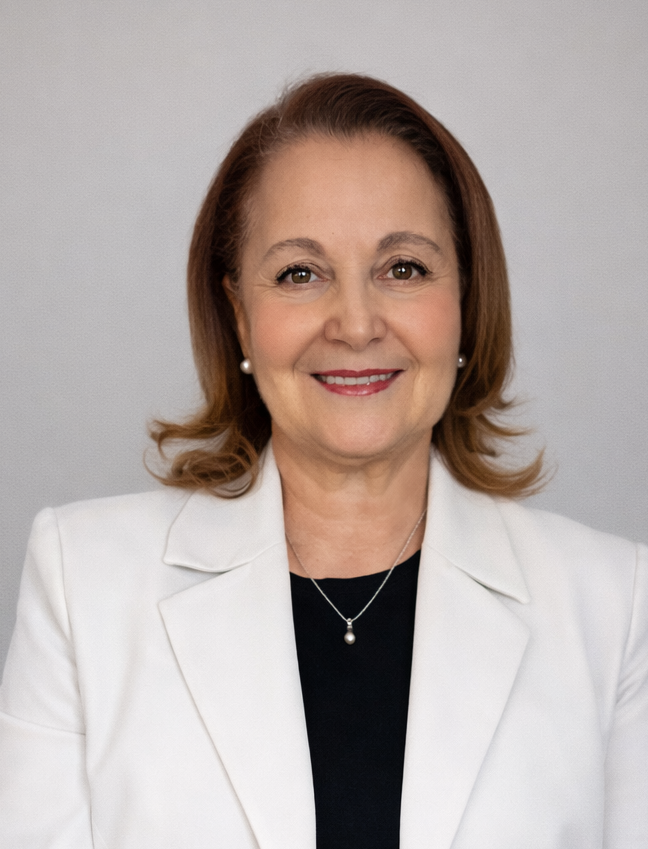
“Be resilient. Never give up. Believe in yourself.”
With over 36 years of experience in the infrastructure and mobility sector, Malika Seddi is today the Secretary-General and CEO of ASECAP, the European Association of Toll Road Operators. Her career began almost by chance, yet it evolved into a remarkable journey of international leadership, innovation, and long-standing commitment to road safety and European cooperation.
In this interview, she shares her professional path, the challenges of working in a traditionally male-dominated sector, and why resilience is key to success.
Your Professional Journey
Could you tell us about your professional journey and how you became the CEO of ASECAP?
My journey started 36 years ago, almost by coincidence. It was 1989. I had just returned to France after spending two years in England teaching French. I was looking for a new opportunity and applied through a work agency. They offered me a two-week assignment in an association connected to the toll road sector.
When they gave me a computer — which was quite new at the time — I honestly told them I had never used one. I was lucky to meet a very empathetic person who took the time to teach me and guide me.
That short assignment was extended again and again, eventually lasting almost a year. The association, called ASECA, was dedicated to road safety for French toll road operators. At that time, accident data existed only on paper. I was asked to create the first road safety database for the French toll motorway network.
That was the real beginning of my journey.
With enthusiasm and fresh ideas, I also proposed launching a newsletter dedicated to road safety, aimed at sharing projects, technologies, and campaigns among motorway operators. The idea was well received, and I was proud to issue the very first edition.
Over time, I took on increasing responsibilities. I became assistant to the Executive Director, coordinated international activities, and represented the organization in European and global institutions.
When I started, I was entering a completely new field, and my role wasn’t very structured—I was expected to be everywhere, which also gave me many opportunities. In the early 1990s, we began receiving many international delegations, mostly Japanese and some Chinese, interested in cooperation. I was asked to welcome and host these groups, sometimes 20 or 30 people at a time, and I developed knowledge programs to explain who we were and what we did. At the same time, I was learning a lot myself, because I was not familiar with toll operations.
I made it a point to gain hands-on experience: I worked at a toll plaza to understand the role of toll collectors, and I spent time in operational departments to see what road maintenance involved, including winter maintenance. This allowed me to understand the full scope of the work in our sector.
Over time, my boss began entrusting me with more responsibilities. He had originally represented the organization in international bodies, but gradually he shifted those responsibilities to me. Thanks to the support and guidance of the people I met along the way, I was eventually appointed to the IBTTA Board of Directors, where I became actively involved in the organization internationally.
I was appointed to the Board of IBTTA and became the first female International Vice President. I also represented France in PIARC (World Road Association), first in the Financing Committee and later in the Road Safety Committee, contributing to the development of a road safety manual.
Within ASECAP, I chaired the Permanent Committee on Road Safety for nearly 15 years before moving to Brussels as Secretary-General and CEO.
Looking back, my career was not planned step by step. It was built through opportunities, hard work, and — above all — the support of people who believed in me, sometimes even more than I believed in myself.
Key Experiences and Achievements
Which experiences were fundamental to your professional growth?
Starting in road safety and building something from scratch was fundamental. Creating the first database and launching the newsletter taught me how to structure ideas, coordinate stakeholders, and turn vision into action.
Another key milestone was my involvement in European projects. In 1998, I coordinated the first participation of French toll road operators in European programs — at that time under the TEMPO initiative, now known as CEF (Connecting Europe Facility). We worked to harmonize traffic information services along the TEN-T corridors.
The objective was to ensure that European citizens — whether Spanish, French, Slovenian, or from any other country — could access seamless and harmonized traffic information services across borders. This required building strong cooperation, developing data exchange standards, and fostering a shared technical language among operators.
Is there a professional success story you are particularly proud of?
I am very proud of launching the first road safety newsletter at association level.
I am also proud of my involvement in European projects on electronic toll collection and the development of the European Toll Service (ETS). While I was not working at a technical level, I contributed to coordination and communication, helping different operators work together and build common frameworks.
Challenges Along the Way
What was the main difficulty you encountered during your career?
Working in a traditionally male-dominated sector was certainly challenging. When I started, I was often the only woman in the room — or one of two.
However, I never felt I did not belong there. If I was in that room, it meant I deserved to be there.
Having mentors and leaders who encouraged me made a huge difference. Sometimes they were more confident in my abilities than I was. That empowerment was essential.
The difficulty was more cultural than personal. Leadership roles were often perceived as naturally male. Fortunately, things are evolving.
Women in the Infrastructure Sector
Are there many women in your sector today?
There are more than before, but still not enough.
When I started, boards were composed exclusively of men. Women were mainly assistants or working in communication roles. This imbalance also originated in education: decades ago, very few women attended engineering schools.
Change must begin with education. Girls must grow up knowing they are just as capable in mathematics and science as boys. Stereotypes start early — sometimes even with the toys we give to children.
Equality must start at home and at school. Boys and girls should be raised with the same rights, the same duties, and the same expectations.
Gender Stereotypes and Leadership
We still live in a world largely dominated by men. Equal gender representation remains high on the agenda because we are far from achieving it.
Measures such as quotas in political or senior positions have helped accelerate change in some European countries. It is not an ideal solution, but without concrete action, progress would have been even slower.
We must acknowledge that things are improving — not as fast as they should, but they are moving in the right direction.
The Future of Mobility in Europe
How do you see mobility evolving in Europe by 2030?
I believe we will see more women involved in decision-making processes.
Mobility will become increasingly shared, multimodal, and digital. Autonomous vehicles — possibly shared autonomous vehicles — will gradually become part of the ecosystem. We have already started addressing these challenges, and innovation will continue to reshape our sector.
Advice to Young Women
What advice would you give to young women aspiring to a career in infrastructure?
Be resilient.
Never give up.
Believe in yourself.
If you are in a position, it is not by chance — it is because you deserve it. Learn to build self-confidence. Even if you sometimes doubt yourself, do not let that define you. Show determination and keep moving forward.
